High School Memories
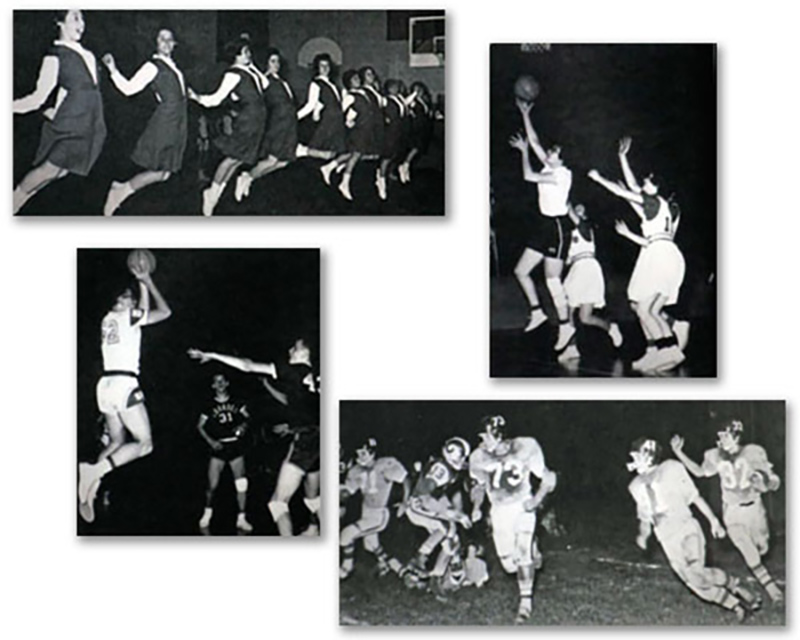
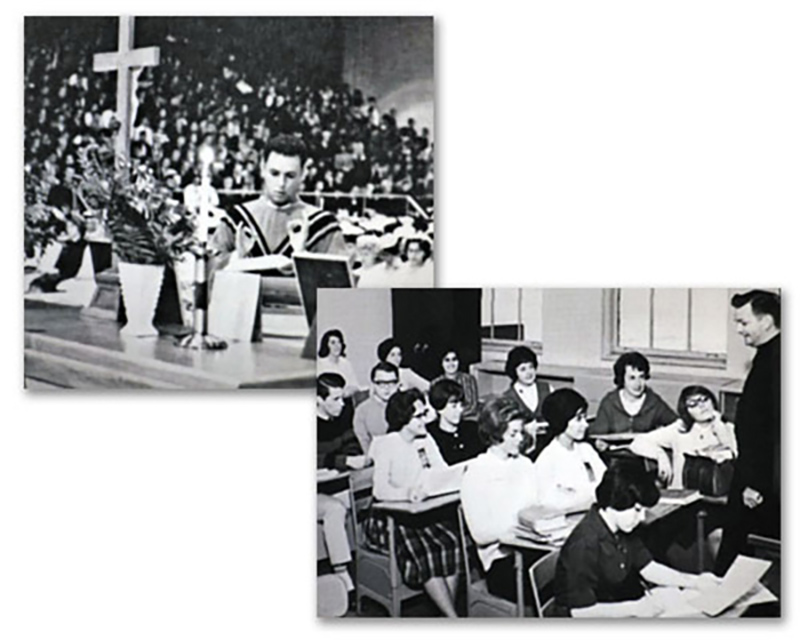
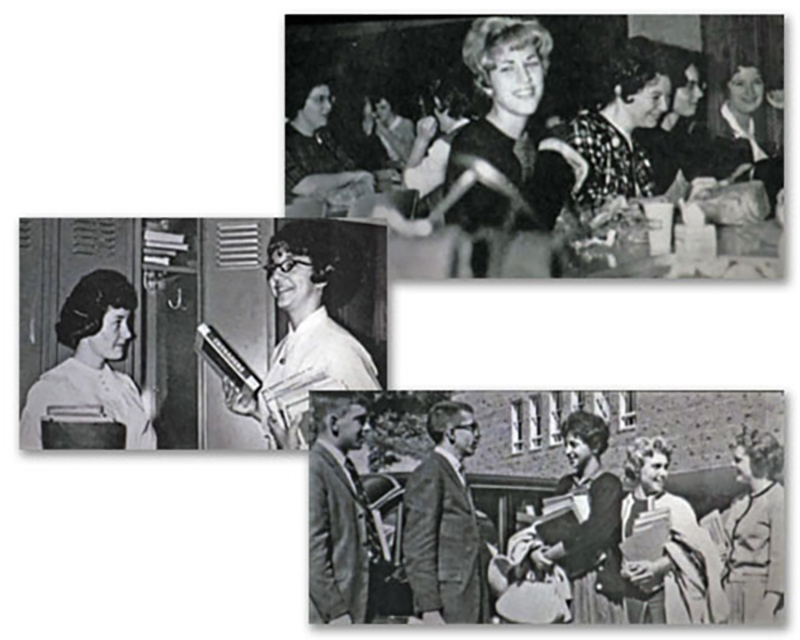
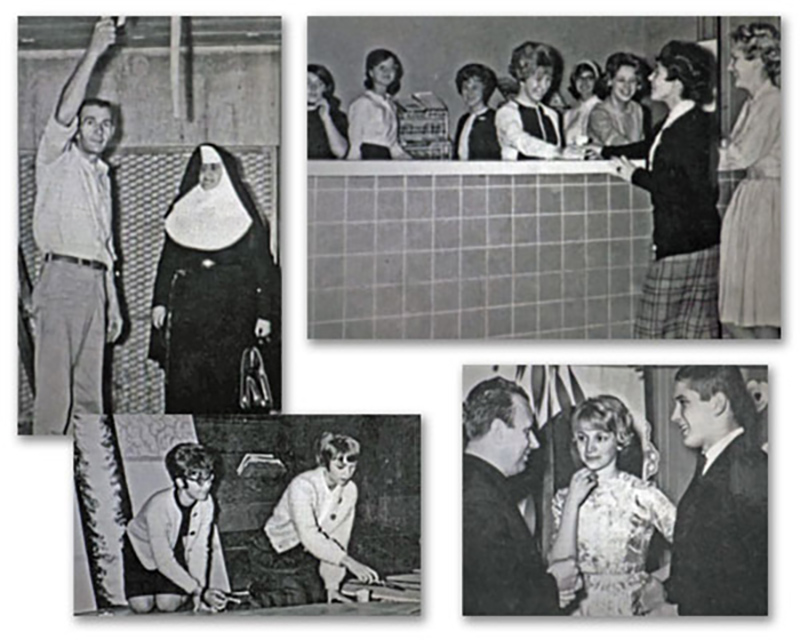
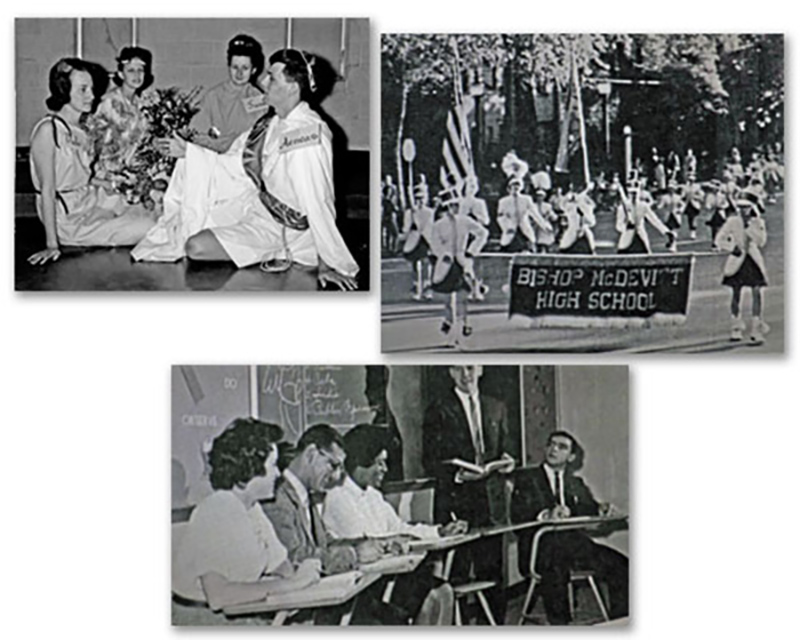
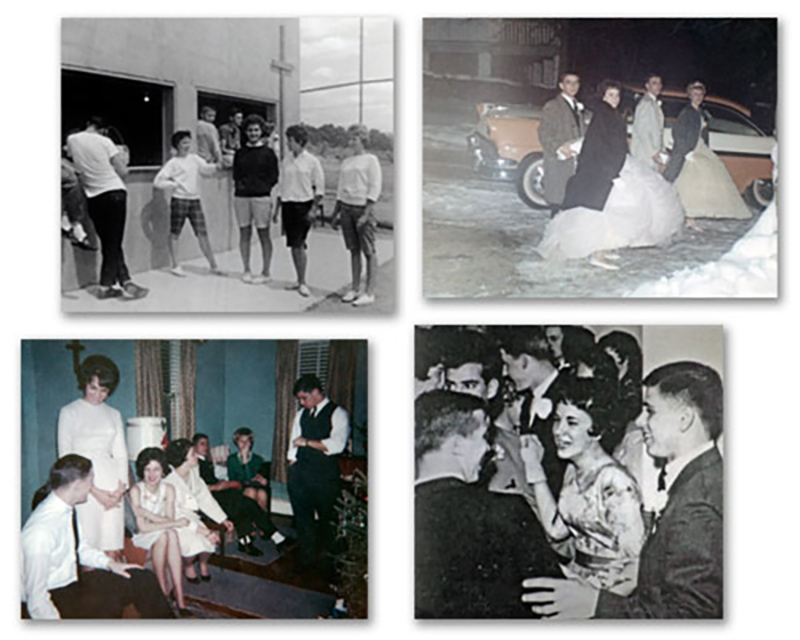
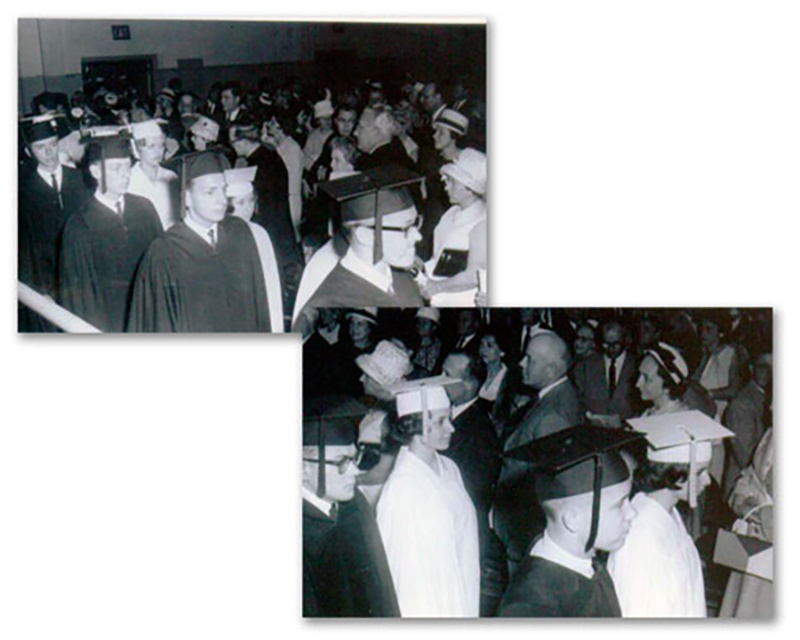
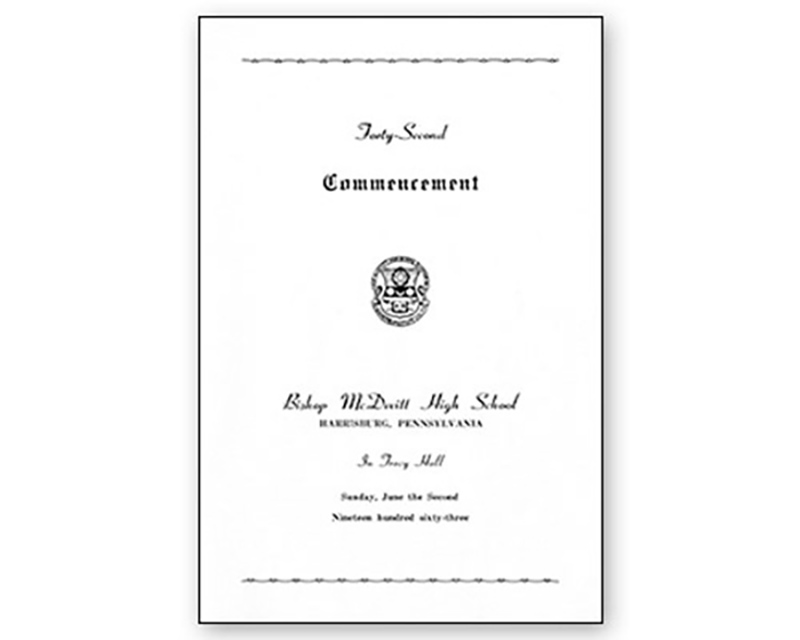
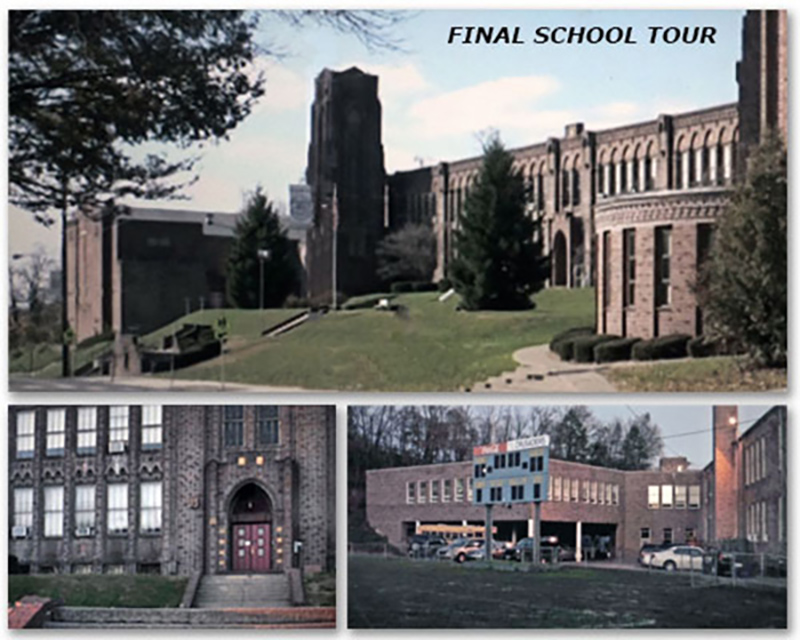
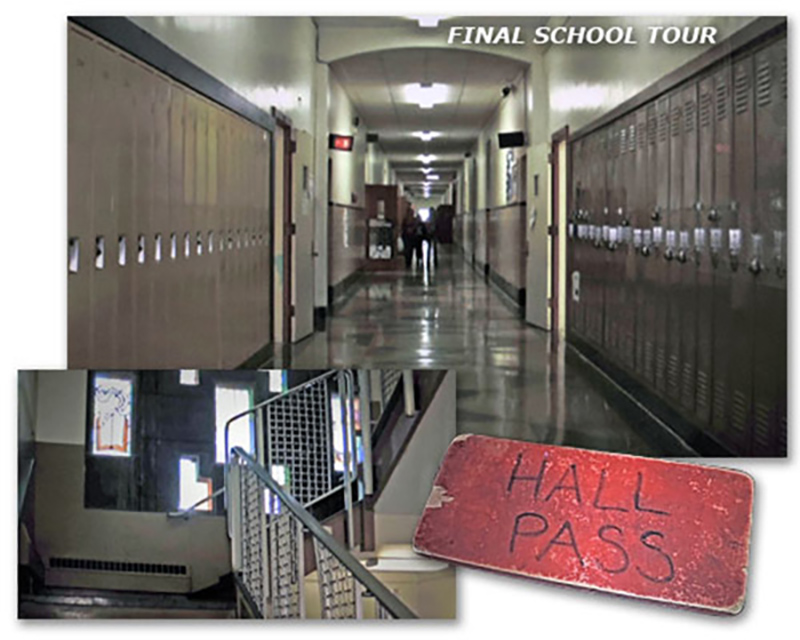
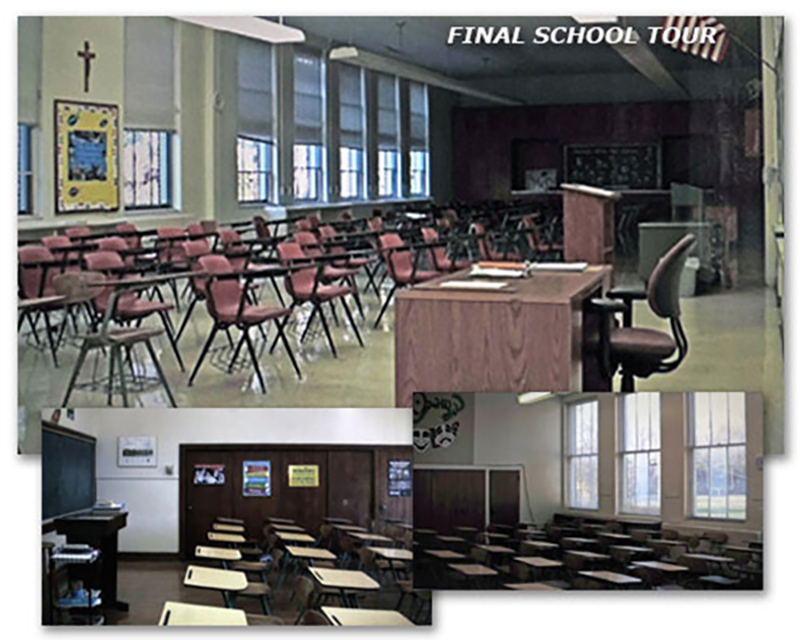
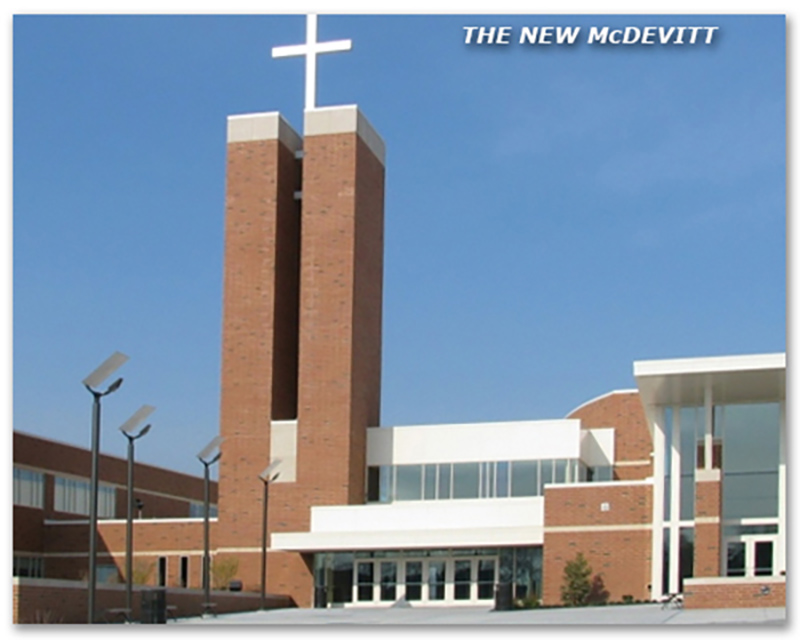
View or Download PDFs of High School Memorabilia
To save the file to your computer, click to open the PDF. Then point your mouse to the center bottom of the screen to reveal the function buttons, and select the circled computer symbol to download the PDF.
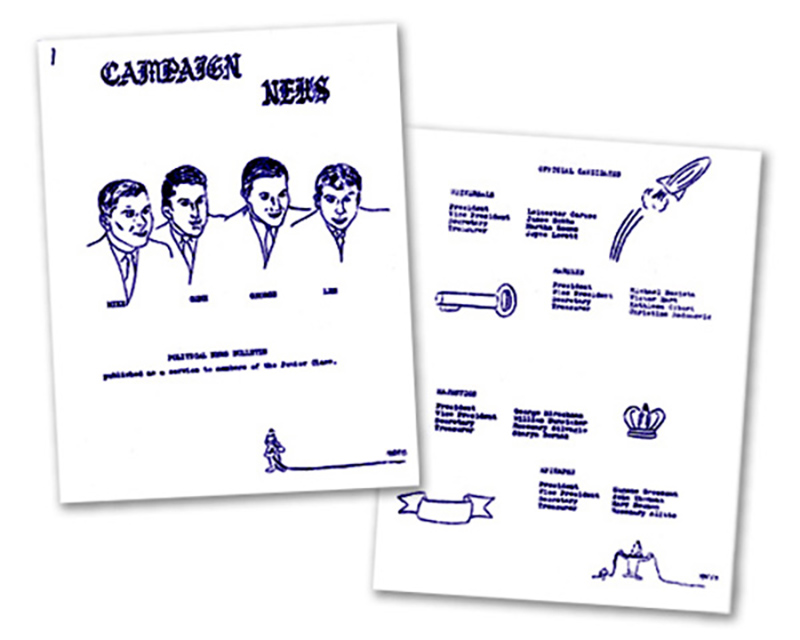
Campaign News
Ring Day Ceremony
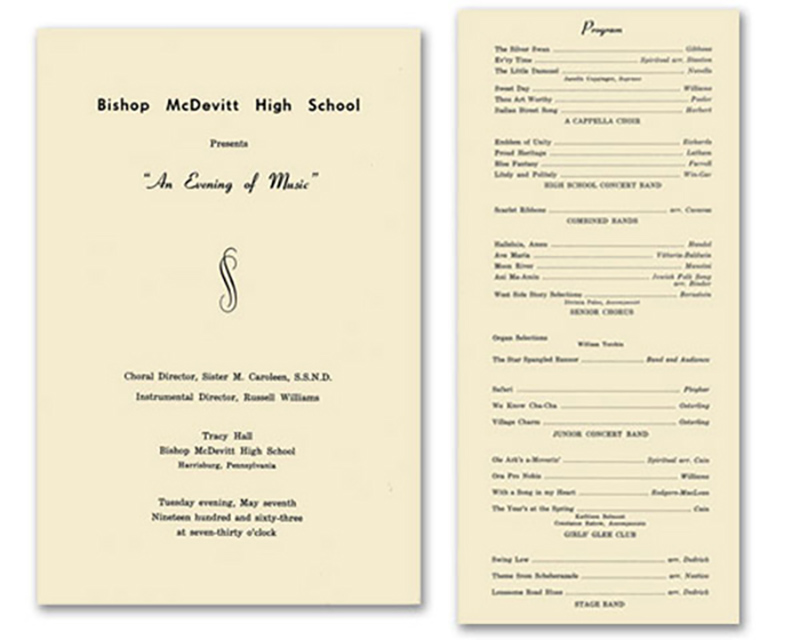
An Evening Of Music
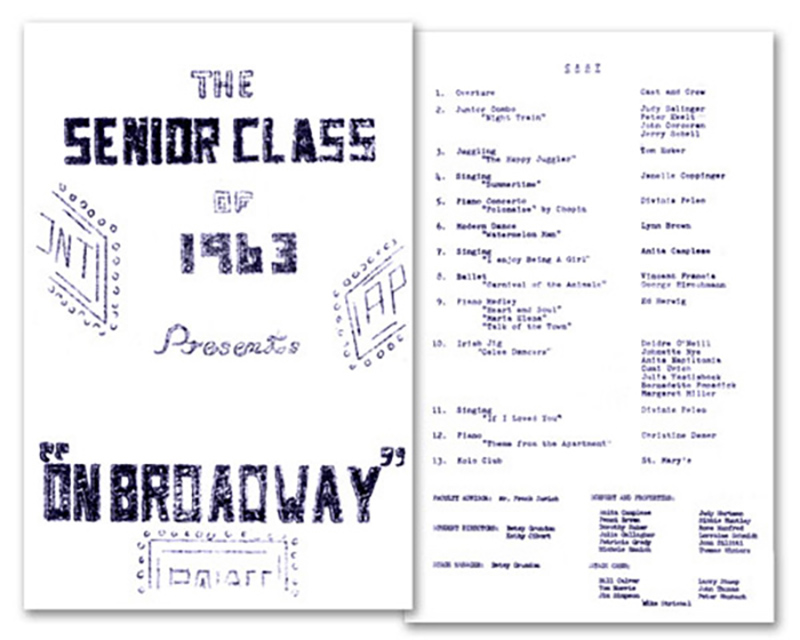
On Broadway
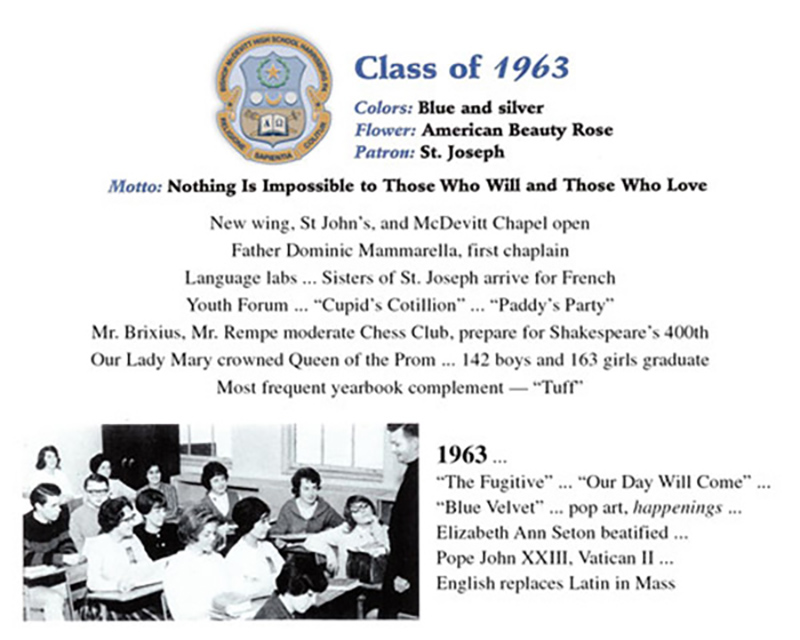
THE SIXTIES
The times were a-changing!
Do you remember … ?
The Space Race was highlighted by Alan Shepard, the first American in space in 1961. In 1963, John Glenn was the first American to orbit the earth. Neil Armstrong and Buzz Aldrin, in Apollo XI, were the first men to walk on the moon in 1969.
When Fidel Castro took over Cuba, the United States broke off diplomatic relations. Castro seized American property. The CIA attacked Cuba in an ill-fated mission at the Bay of Pigs. When a spy plane identified long range missiles in Cuba in 1962, President Kennedy readied troops to invade, and the Soviet Union prepared to fire at US cities.
President Kennedy was assassinated by Lee Harvey Oswald on November 22, 1963, and was succeeded by Vice President Johnson.
The United States sent military advisors and then soldiers to prevent Communism from overtaking South Vietnam. Largely a secret war until 1965, massive troop buildups were ordered to put an end to the conflict. The draft accelerated, anti-war sentiment grew, college students organized anti-war protests, and draft dodgers fled to Canada. Blamed by many for the war, Johnson did not run for reelection in 1968.
The Civil Rights movement brought great changes in the ’60s, beginning peacefully with Martin Luther King and Stokely Carmichael leading sit-ins and peaceful protests. Malcolm X preached about Black Nationalism; the Black Panthers continued his work after his assassination. In 1963 George C Wallace was sworn in as governor of Alabama, stating “segregation now; segregation tomorrow; segregation forever!” The Watts riots broke out in Los Angeles in 1965. The term “blacks” replaced “Negroes.”
Hispanic Americans tripled during the decade. Cesar Chavez organized the United Farm Workers Association. American Indians, with unemployment rates of 50% and a life expectancy two-thirds that of whites, asserted themselves in the courts and in violent protests.
The Presidential Commission of the Status of Women (1963) presented disturbing facts about women’s place in our society. Betty Friedan, Pauli Murray and Gloria Steinem questioned the unequal treatment of women, gave birth to Women’s Lib, and disclosed the “glass ceiling.” The Civil Rights Act of 1964 was amended to include gender. The birth control pill became widely available.
Prayer in the public schools was declared unconstitutional in 1962 by the Supreme Court. As the ’60s progressed, many young people turned to eastern religions such as Transcendental Meditation or Zen Buddhism. Respect for authority declined among the young, and crime rates soared to nine times the rate of the ’50s. Marijuana use soared. Harvard psychologist Timothy Leary encouraged the use of LSD as a mind-opening drug. The hippie movement endorsed drugs, rock music, mystic religions and sexual freedom, opposed violence, and lived in communes. The Woodstock Festival represents the pinnacle of the hippie movement.
During the sixties, college campuses became centers of debate and scenes of protest more than ever before. Great numbers of young people reaching military draft age but not voting age (21 until 1971) caused a struggle on many campuses as the Vietnam War escalated. The generation gap became a growing phenomenon.
People became more concerned with their health and their environment. The surgeon general determined that smoking was a health hazard, requiring cigarette manufacturers to place warnings on packages and in ads in 1965. Dr. Denton Cooley implanted the first artificial heart in a human, which kept the patient alive for three days until a human heart was transplanted.
’63 MUSIC & TV
Popular songs: “Go Away Little Girl” by Steve Lawrence; “Puff (The Magic Dragon)” by Peter, Paul & Mary; “If You Wanna Be Happy” by Jimmy Soul; “Fingertips” by “Little” Stevie Wonder (13); “Hello Mudda, Hello Fadda” by Allan Sherman; “Louie, Louie” by the Kingsmen (labeled obscene by radio stations); “I Want To Hold Your Hand”/”I Saw Her Standing There” by the Beatles
Beatles first US TV appearance (Big Night Out, ABC); Rolling Stones first tour (opened for Bo Diddley & Everly Bros)
CBS & NBC expanded network news from 15 to 30 minutes.
American Bandstand moved to California, airing once a week on Saturday.
TV shows: “Outer Limits,” “Fugitive,” “Judy Garland Show,” “My Favorite Martian,” “Let’s Make A Deal”
’63 AWARDS
35th Academy Awards: “Lawrence of Arabia,” Anne Bancroft (The Miracle Worker), Gregory Peck (To Kill a Mockingbird)
17th Tony Awards: “Who’s Afraid of Virginia Woolf?” and “A Funny Thing Happened on the Way to the Forum” win
15th Emmy Awards: Dick Van Dyke Show, E G Marshall & Shirley Booth
Pulitzer prize: Barbara Tuchman (Guns of August)
Grammy Awards: Peter, Paul & Mary (If I Had a Hammer)